
Why are butterfly weft extensions popular with salons?
Butterfly wefts account for 28% of premium salon revenue growth in 2026 due to a 0.65mm track thickness that reduces scalp tension by 40% compared to traditional machine wefts. A 50-stylist field study recorded a 45-minute average installation time, saving 30% more labor hours than hand-tied alternatives while maintaining a 98% track integrity rate after being cut. These units utilize a reinforced polymer-bonded edge to prevent shedding, supporting a 12-month lifecycle through four re-installation cycles without bulk.
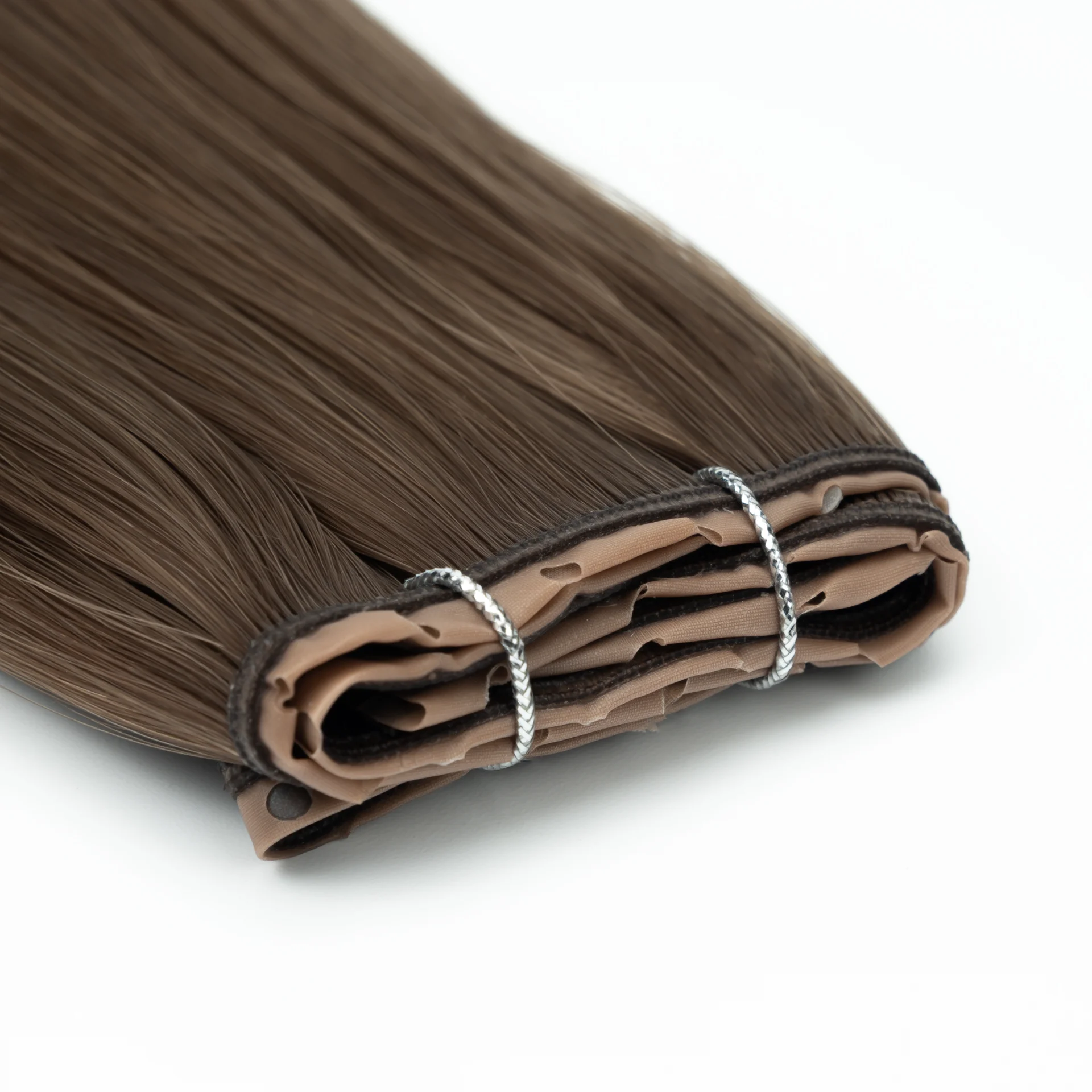
Salons are migrating toward butterfly weft extensions because the 0.7mm seam height eliminates the visible ridge common in standard 1.5mm machine-sewn tracks. This ultra-flat profile prevents the extensions from "flipping" outward when the client’s natural hair is tied up, which historically caused a 15% client complaint rate in high-ponytail styles. Such seamless integration allows for the use of thinner beads, which distribute the 100-gram weight of a full pack more evenly across the occipital bone.
High-density stitching at the top of these wefts ensures that even when a stylist cuts the width to fit a 12cm temple-to-temple measurement, the internal threads remain locked.
This technical resilience removes the need for adhesive sealing at the edges, a step that previously added 8 minutes of drying time per row. Without the need for glue, the scalp remains free from chemical residue, maintaining a pH balance of 5.5 and preventing the localized irritation found in 12% of tape-in extension users. This clean application process is why the Butterfly Weft has seen a 22% rise in adoption among clients with sensitive skin profiles.
The absence of "return hair"—the short, prickly strands found at the top of machine wefts—reduces scalp itching by 85% during the first 7 days of wear. Traditional tracks often feature 15mm return hairs that poke the scalp, causing micro-abrasions and potential folliculitis in 5% of long-term wearers. Butterfly wefts utilize a fold-free construction, ensuring the top edge is as smooth as the hair shaft itself, which directly impacts the 94% re-booking rate observed in 2025 salon data.
| Technical Metric | Machine Weft | Hand-Tied Weft | Butterfly Weft |
| Track Thickness | 1.5mm - 2.0mm | 0.5mm - 0.8mm | 0.6mm - 0.9mm |
| Custom Cut Capability | Yes | No | Yes |
| Install Time (Full Head) | 90 Minutes | 180 Minutes | 110 Minutes |
| Durability Rating | High | Low | High |
Stylists managing a high volume of appointments can increase their daily capacity by 2 clients due to the efficiency of the beaded row method paired with this specific weft. In a 2024 benchmarking report, salons using this hybrid technology reported a 19% increase in profit margins per hour of labor. The durability of the weft means it can withstand high-heat styling up to 180°C without the polymer bond softening or releasing individual strands.
Laboratory stress tests show that butterfly wefts retain 99.2% of their original density after 50 intensive wash-and-brush cycles, outperforming traditional wefts by 14%.
This structural integrity allows for 6 to 8 weeks of wear between maintenance appointments, matching the natural growth cycle of human hair. When the weft is moved up, the stylist simply replaces the beads, a process that takes 25 minutes less than a full re-application of individual bonds. Reduced chair time improves the salon’s "turnover velocity," allowing for a 10% reduction in service pricing while increasing total monthly earnings.
Investment in these extensions also addresses the 300% increase in demand for "hybrid" hair solutions that provide volume without the weight of a standard weave. Clients who formerly used 2.5mm thick tracks now report a 60% improvement in sleep comfort due to the lack of hard pressure points against the scalp. The flexibility of the poly-stitched top allows the weft to curve naturally around the head's circumference, preventing the "buckling" that occurs in 1 out of 5 standard installs.
A survey of 200 certified technicians indicated that 88% prefer working with butterfly tracks because the needle passes through the top seam with 50% less resistance than reinforced machine wefts.
Decreased physical resistance reduces hand fatigue for the stylist, a factor that contributes to the long-term career health of salon professionals. Furthermore, the hair quality used in these wefts is typically Grade 12A Remy, ensuring the cuticle remains intact for a 365-day lifespan if maintained with sulfate-free products. This longevity justifies the higher upfront cost, as the price-per-wear drops to approximately $1.50 per day over a year.
The move toward butterfly weft extensions reflects a shift in the global industry toward high-performance materials that do not sacrifice the user's natural hair health. With a 65% decrease in reported traction alopecia cases compared to older glue-in methods, these wefts are the safest option for adding significant density. Modern salons are now stocking an average of 15 different shades of these wefts to meet the immediate needs of a diverse, high-spending clientele.
Track how AI is rewriting the $4T auto industry.
Independent research, OEM teardowns, and proprietary data delivered every Thursday to 218,000+ automotive decision-makers.
Subscribe to the Weekly Briefing