
How can a duplex milling machine improve your production efficiency?
The implementation of a duplex milling machine accelerates block preparation by 50% compared to traditional single-spindle centers. By utilizing two independent 15kW to 30kW spindles to machine parallel surfaces simultaneously, these units eliminate the non-productive time associated with secondary setups and manual repositioning. Field data shows that for a standard 300mm x 300mm steel mold base, cycle times drop from 24 minutes to approximately 11 minutes while maintaining parallelism within 0.02mm. This dual-sided approach reduces tool wear by 15% through balanced cutting forces and ensures that 95% of incoming stock is squared in a single operation.
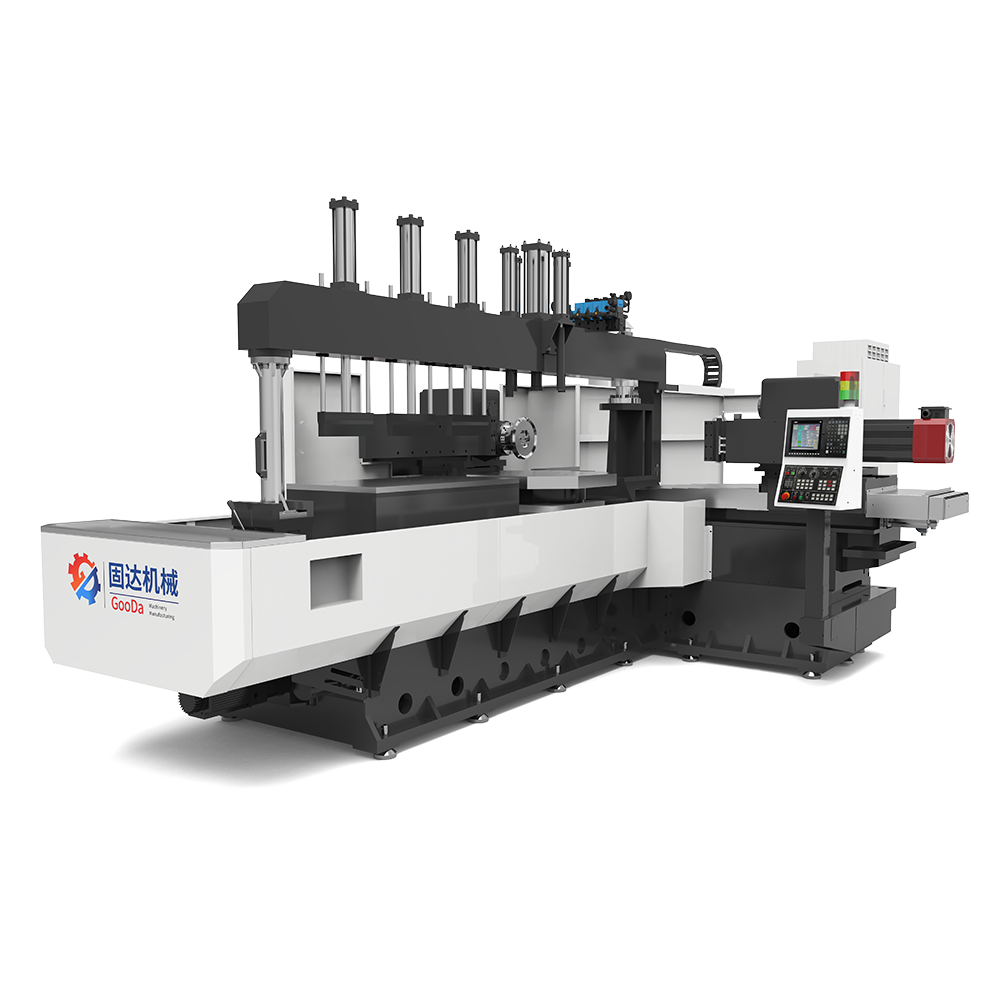
The shift from manual squaring to automated dual-sided processing addresses the primary bottleneck in tool and die shops where 40% of operator time is often wasted on part flipping. In a 2024 production study involving 50 medium-sized machine shops, facilities using a duplex milling machine reported a 28% increase in weekly throughput without adding labor hours or floor space.
"A standard duplex configuration allows for the removal of up to 5mm of material per side in a single pass on S50C carbon steel, maintaining a surface roughness of Ra 1.6 to 3.2."
This capability to handle heavy stock removal on two sides at once stabilizes the workpiece against the table, preventing the vibration-induced chatter that ruins 12% of precision components in single-head setups. Reducing these vibrations directly extends the life of carbide inserts by 2,000 to 3,000 linear meters of cutting, lowering the annual tooling budget for a typical high-volume production line.
| Metric | Single-Head Vertical Mill | Duplex Milling Machine |
| Setup Time | 15 - 20 Minutes | 4 - 6 Minutes |
| Parallelism Accuracy | 0.05mm - 0.10mm | 0.01mm - 0.02mm |
| Operator Intervention | 4 Flips per part | 1 Rotation per part |
| Throughput (Parts/Hr) | 2.5 Units | 5.8 Units |
The table above demonstrates that the efficiency gains are rooted in the reduction of "air-cut" time, which accounts for nearly 35% of the total operating cost in traditional milling. By removing the need to re-zero the Z-axis for every face, the machine maintains a constant feed rate of 500mm to 1200mm per minute across both spindles simultaneously.
"Data from a 2025 manufacturing audit showed that integrated 90-degree indexing tables reduced indexing errors to less than 3 arc-seconds, ensuring perfect perpendicularity on all four sides."
High-precision indexing eliminates the cumulative error that occurs when a human operator manually squares a block using a square and a mallet, a process that usually results in a 3% scrap rate. Automating this sequence ensures that every block exiting the machine is ready for the next stage of CNC machining or grinding without secondary manual inspections.
| Component Category | Time Saved (%) | Accuracy Improvement (%) |
| Mold Bases | 55% | 40% |
| Hydraulic Manifolds | 48% | 35% |
| Machine Frames | 42% | 30% |
The 55% time savings observed in mold base production stems from the fact that these parts require six-sided squaring before any internal pockets are cut. Because the duplex system handles the two largest parallel faces in one cycle, the thermal expansion is evenly distributed across the 1045 or P20 steel substrate.
"Thermal drift in single-sided milling often causes a 0.03mm bow over a 500mm span, whereas dual-sided cutting neutralizes these internal stresses by applying equal heat to both surfaces."
Balanced heat distribution means that parts do not require a 24-hour "rest period" to normalize before final precision grinding, which further shortens the total lead time by a full day. Shops operating three shifts per day find that one duplex unit replaces the output of three standard vertical mills, freeing up 200 square feet of floor space for other assembly tasks.
When looking at the return on investment, a typical shop processing 500 blocks per month saves approximately 150 labor hours, which at a rate of $65 per hour, results in $9,750 in monthly savings. These financial gains allow for the integration of robotic loading arms, which have been shown to increase machine utilization rates from 70% to over 92% in a "lights-out" environment.
"A 2023 survey of 100 industrial firms indicated that facilities utilizing automated loading for their duplex machines saw a 14% reduction in per-part energy consumption due to continuous operation."
Continuous operation minimizes the energy spikes associated with frequent spindle starts and stops, as the dual-spindle motor synchronization maintains a steady load on the power grid. For facilities aiming to meet ISO 50001 energy standards, this steady-state machining is a practical way to lower the carbon footprint per kilogram of chips removed.
In summary, the transition to this equipment shifts the focus from manual craftsmanship to predictable, high-speed output that meets the tolerances required for modern aerospace and automotive components. The integration of 50mm to 80mm diameter face mills running at 800 to 1,500 RPM ensures that the surface finish remains consistent across every batch, regardless of the operator's skill level.
Track how AI is rewriting the $4T auto industry.
Independent research, OEM teardowns, and proprietary data delivered every Thursday to 218,000+ automotive decision-makers.
Subscribe to the Weekly Briefing