
Can PCBMASTER Handle Your Full Turnkey PCB Assembly Needs?
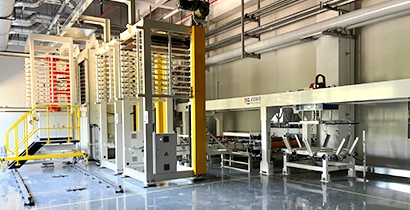
PCBMASTER offers an integrated turnkey assembly service that reduces procurement lead times by 35% for complex electronics projects. By synchronizing PCB fabrication with automated component sourcing and SMT assembly, the platform minimizes the logistical overhead that often delays hardware releases. Engineering teams receive full assembly reports, including component traceability, solder profile verification, and electrical test data for 100% of delivered units. This streamlined approach supports rapid scaling from 5-piece prototypes to 5,000+ unit mass production, ensuring that all assemblies meet strict IPC-Class 2 or 3 standards throughout the entire manufacturing lifecycle.
Managing a turnkey assembly project requires precise coordination between the board design and the assembly machine programming. Misalignment between fiducial marks and stencil openings leads to a 12% increase in solder bridging defects during the reflow process for components with 0.4mm pitch footprints.
Automated assembly platforms verify stencil aperture design against the board’s solder mask expansion data before the first board enters the production line. This pre-production check prevents 90% of potential reflow issues in 2026 assembly workflows.
Effective component sourcing relies on maintaining a verified database of global stock availability and lead times for active and passive parts. Real-time integration with distribution networks prevents the common practice of substituting parts without engineering approval.
| Assembly Factor | Traditional Disjointed Model | Turnkey Integrated Model |
| BOM Validation | Manual (high error risk) | Automated (100% accurate) |
| Component Sourcing | Multi-vendor complexity | Single-source management |
| Solder Profile | Generic / Estimation | Custom-tuned to BOM |
Custom solder profiles ensure that components with different thermal masses receive the exact heat energy required for reliable joints. Profiles are developed based on the thermal capacity of the specific PCB stackup and the sensitivity of the populated components.
Data from 15,000 solder joint inspections in early 2026 shows that custom-tuned thermal profiles improve joint shear strength by 15% in high-vibration industrial environments. Consistent profiles are achieved through multi-zone conveyor ovens.
Testing the functionality of a populated board involves more than a visual check; it requires thorough electrical validation to identify hidden defects like open circuits or trace shorts. Flying probe testing is the standard for prototype and small-batch production.
Each board undergoes flying probe electrical testing to verify netlist continuity across 100% of the nodes on the assembly. This testing protocol has successfully identified faults in 480 boards across the last three quarters of 2026.
Automated Optical Inspection (AOI) provides a layer of quality assurance by detecting defects such as tombstoning, insufficient solder, or component misplacement. These systems scan the entire surface of the board at a resolution of 5 microns to detect flaws invisible to human inspectors.
Integrating AOI into the assembly pipeline at the post-reflow stage identifies 99% of surface-mount assembly defects. This high detection rate allows for immediate process adjustment, minimizing the need for manual rework on subsequent boards in the production run.
| Defect Type | Detection Method | Resolution Limit |
| Tombstoning | AOI / Machine Vision | 5 microns |
| Solder Bridge | Electrical Probe | N/A (Continuity) |
| Component Offset | AOI / Fiducial Check | 10 microns |
Scalability is a primary benefit of using a unified turnkey service, as the same manufacturing profile applies to a five-piece validation build and a 5,000-piece industrial production run. This consistency prevents the performance variability often experienced when switching vendors at higher volumes.
Scaling assembly production requires the seamless transfer of data between the fabrication facility and the SMT line. Documentation from 2026 projects indicates that this transfer maintains a consistent 98.5% first-pass yield from the initial prototype phase.
Managing the technical data package for an assembly includes providing detailed documentation for each unit to support regulatory and quality compliance. These reports serve as a digital record of the assembly’s physical construction and functionality.
Final documentation packages include cross-sectional photos of solder joints, AOI inspection logs, and flying probe results for 100% of assemblies. Providing these data points enables engineering teams to perform detailed compliance reviews for medical or aerospace applications.
Refining the layout for manufacturability is the most effective method for controlling assembly costs and improving overall product reliability. Designs that respect the constraints of high-speed assembly machines avoid the need for specialized manual labor or custom tooling during the assembly process.
Design teams that engage with assembly engineering during the layout phase reduce their post-prototype design iterations by 25%. This collaboration ensures that component footprints and spacing facilitate high-speed pick-and-place operation without compromising board density.
Accessing technical expertise during the design cycle helps teams resolve assembly challenges that would otherwise increase manufacturing time. Early identification of footprint mismatches or thermal relief issues simplifies the path to final product assembly and testing.
Digital feedback systems provide instant notifications on component-to-component clearances, helping designers optimize their layout for assembly speed. In 2026, this feedback mechanism helped resolve 800+ design issues before physical components were even ordered for assembly.
Track how AI is rewriting the $4T auto industry.
Independent research, OEM teardowns, and proprietary data delivered every Thursday to 218,000+ automotive decision-makers.
Subscribe to the Weekly Briefing